If You Give a Mouse a Cookie: Read-Aloud, Summary & Cause-and-Effect Activities
Tales with Mom
June 13, 2026 5 min read
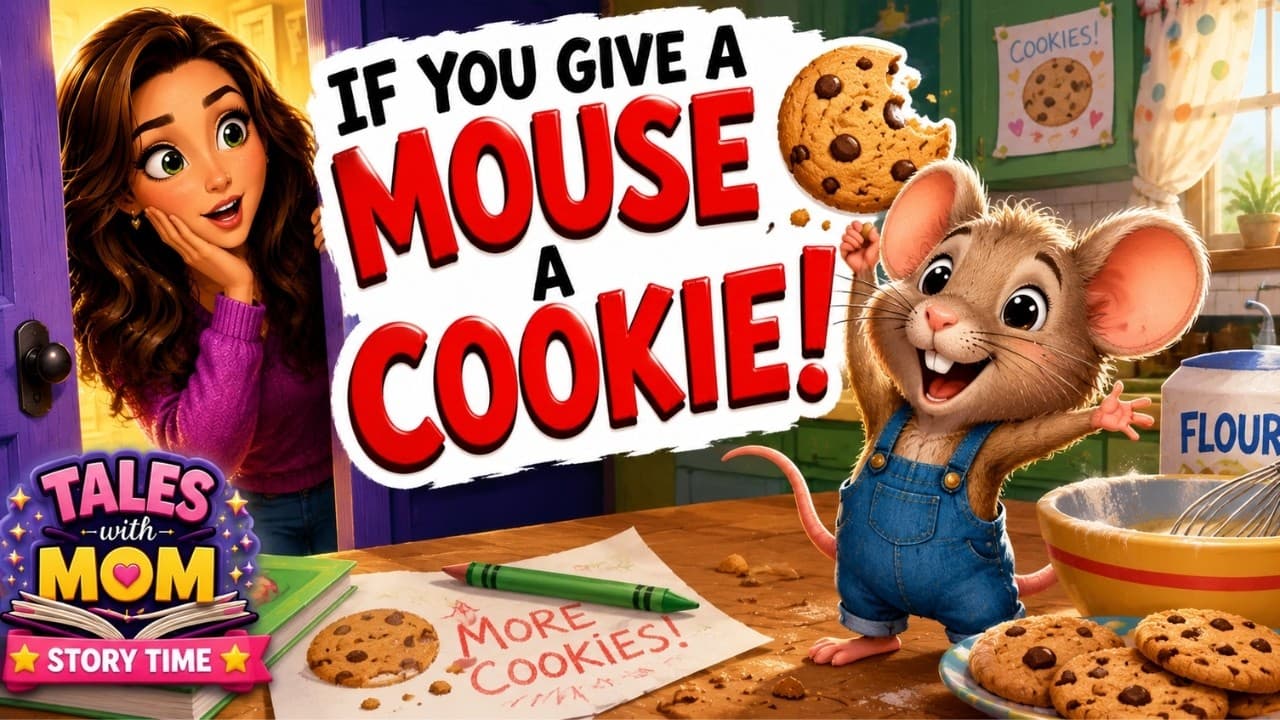
If You Give a Mouse a Cookie is Laura Numeroff's beloved circular story about a little mouse whose one cookie sparks a chain of sweet, snowballing requests, a glass of milk, a straw, a napkin, and on and on, until he loops right back to wanting another cookie. It is a giggly, predictable read that quietly teaches toddlers how one thing leads to the next, and Mom's read-aloud, with custom animation, makes every step of the loop impossible to resist.
Watch the read-aloud
Press play for Mom's full read-aloud of this circular classic, animated and read with all the playful energy the chain of requests deserves.
What happens in If You Give a Mouse a Cookie
A little boy hands a hungry mouse a cookie. The cookie makes the mouse thirsty, so he asks for a glass of milk. The milk needs a straw, then a napkin, then a peek in the mirror to check for a milk mustache. One small yes leads to the next: a little trim, a broom to sweep up, a nap, a story, and a drawing for the refrigerator. Taping the drawing to the fridge reminds the mouse that he is thirsty, so of course he asks for a glass of milk, and a glass of milk will need a cookie to go with it. The loop begins all over again.
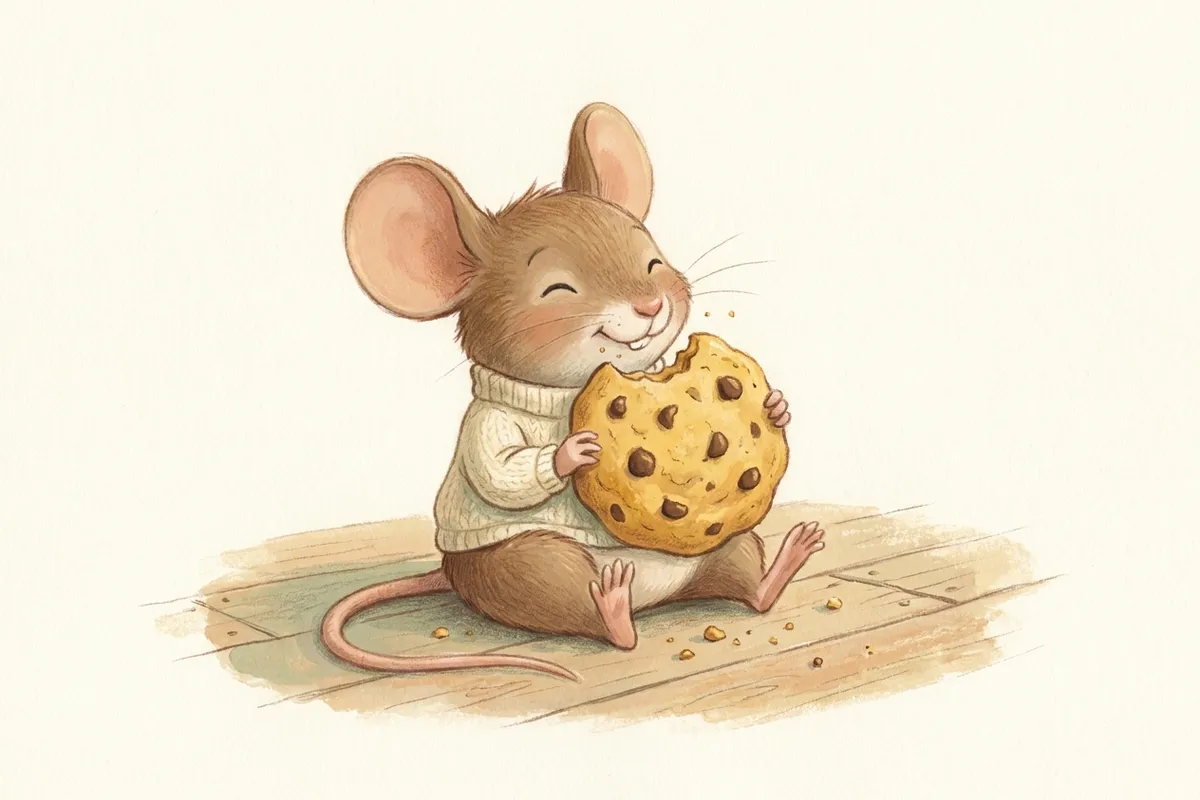
If you give a mouse a cookie, he's going to ask for a glass of milk.
What your child takes away
Underneath the giggles, the mouse is modeling one of the most useful early-thinking skills there is: cause and effect. Every page invites your child to connect a small action to what happens next, then to guess where the story will go. That kind of if-then thinking is the same logic that later powers early math, science, and reading comprehension. The repeating pattern, called a circular story, also builds memory and sequencing as your toddler learns to anticipate each step and chime in.
How to read it together
This book is built for participation, so let your child do the predicting. Pause before each new request and ask, “What do you think he will want now?” The fun is in the guessing, and the repetition means even very little ones can join in by the second read. At the end, trace the chain backward together: how did we get from a cookie all the way to another cookie? Reading it more than once is a feature, not a chore, because the pattern only gets more satisfying the better your child knows it. For more ways to keep a busy toddler leaning in, our guide on reading to a wiggly toddler pairs nicely with this one.
Talk about it: cause-and-effect questions
A few questions to ask after the story (there are no wrong answers):
- Why did the mouse want a glass of milk? (Hint: the cookie made him thirsty.)
- What do you think he will ask for next?
- How did we end up right back at a cookie?
- Can you think of a time you wanted one thing that led to wanting another?
Cause-and-effect activities to try
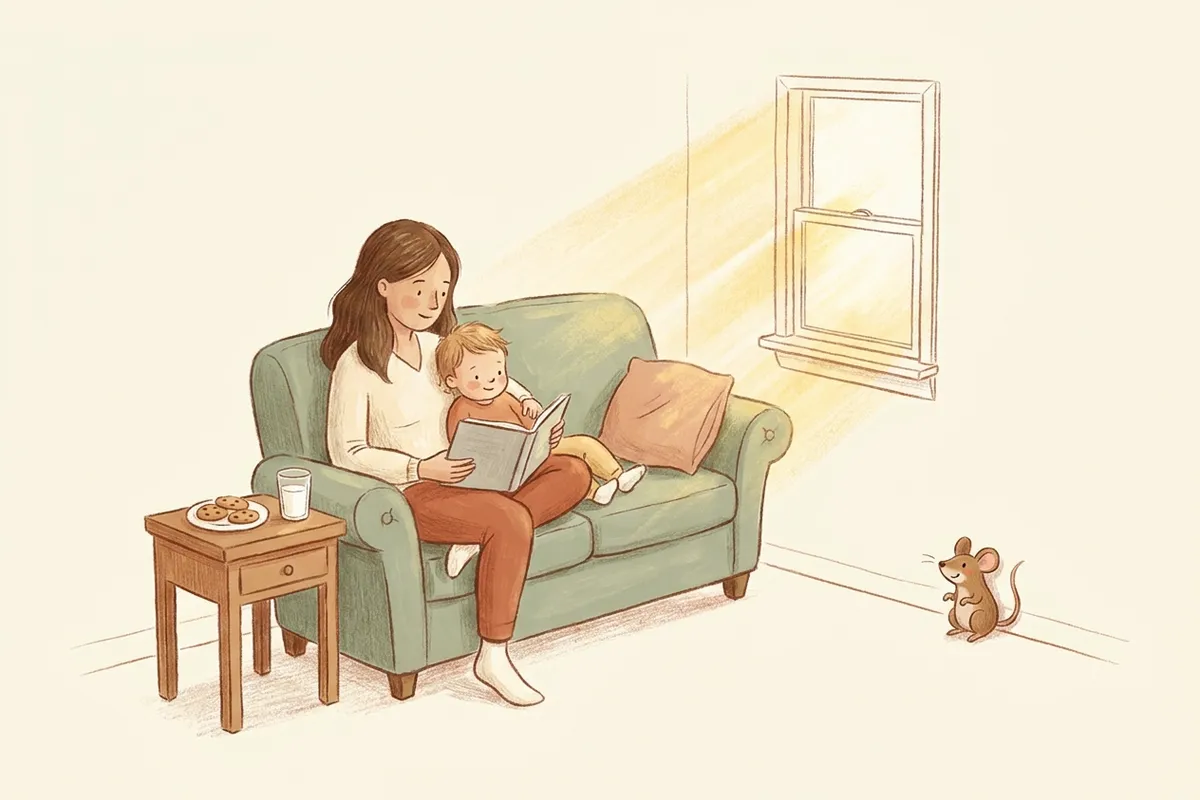
- Bake real cookies together and narrate each step: first we mix, then we bake, then we share. Baking is cause and effect you can taste.
- Play the “if you give…” game: “If you give a puppy a ball, he is going to want…?” and let your child finish the chain.
- Draw the story as a circle of little pictures, from cookie to milk to mirror and back, so your child can see the loop.
- Put the day in order: first breakfast, then shoes, then the park. Everyday sequencing is the same skill the mouse is practicing.
More cozy tales like this
If your little one loved following the mouse, keep the giggles going with more of Mom's read-alouds in our story library. And if you are nurturing a budding bookworm, raising a reader has gentle, practical tips for making books part of every day.